


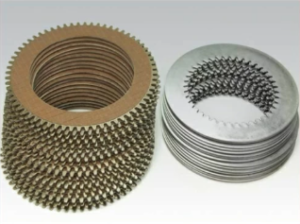
Parts Catalog for Twin Disc MG5075A Marine Transmissions
Plate Kit For Twin Disc MG5075A Marine Transmission
Gasket Kits For Twin Disc MG5075A Marine Transmission
Introduction to Adjustments and Calibration
The Twin Disc MG5075A marine transmission is a high-performance system that requires precise adjustments and calibration to function efficiently. Proper calibration ensures smooth shifting, optimal clutch engagement, and hydraulic pressure balance , preventing transmission failures and maximizing longevity.
If the transmission is not properly adjusted , it can lead to harsh shifting, clutch slippage, inefficient power transfer, and increased wear on internal components . This section will cover adjusting clutch engagement pressure, shift control linkages, hydraulic pressure settings, and fine-tuning for optimal performance .
A systematic and precise approach to calibration ensures the transmission operates reliably under various marine conditions , reducing downtime and maintenance costs.
1. Setting Proper Clutch Engagement Pressure
The clutch engagement pressure in the Twin Disc MG5075A transmission is critical for smooth shifting and power transfer . If the clutch pressure is too high , it may cause harsh shifting and increased wear on clutch plates . If too low , the clutch may slip , reducing efficiency and causing overheating.
A. Signs of Incorrect Clutch Engagement Pressure
✔
Slipping clutch
under load.
✔
Delayed engagement
when shifting gears.
✔
Harsh gear changes
with excessive force.
✔
Overheating transmission fluid
due to excessive friction.
B. Adjusting Clutch Engagement Pressure
To properly set clutch engagement pressure, follow these steps:
1. Checking the Current Clutch Pressure
✔ Locate the
hydraulic pressure test port
on the transmission.
✔ Attach a
pressure gauge
to monitor the clutch engagement force.
✔ Start the engine and shift through gears while monitoring pressure readings.
2. Adjusting Clutch Pressure
✔ Find the
clutch pressure regulator
(usually a screw-type adjuster).
✔
Increase pressure
slightly if the clutch is slipping.
✔
Decrease pressure
if shifting is too harsh.
✔ Adjust in
small increments
and recheck readings after each change.
3. Testing the Adjustment
✔ Shift through
forward and reverse gears
multiple times.
✔ Ensure
smooth clutch engagement without delay
.
✔ Run the transmission under
various loads
to verify pressure balance.
Proper clutch engagement pressure ensures reliable shifting and prevents excessive wear on clutch components.
2. Adjusting Shift Control Linkages
Shift control linkages are mechanical or electronic systems that connect the throttle, transmission control, and shift levers to the MG5075A transmission . Improper adjustments can lead to delayed, inaccurate, or harsh gear shifts .
A. Symptoms of Incorrectly Adjusted Shift Linkages
✔
Delayed response when shifting
between forward and reverse.
✔
Transmission does not shift into gear fully
, causing slipping.
✔
Harsh or jerky gear engagement
.
✔
Excessive force required to engage gears
.
B. Adjusting the Shift Control Linkages
Follow these steps to ensure proper alignment and tension in the shift control linkage:
1. Inspect the Shift Linkages
✔ Examine the
cables or electronic actuators
for wear or damage.
✔ Ensure
no obstructions
are preventing smooth movement.
2. Adjusting Mechanical Shift Cables
✔
Loosen the cable lock nuts
to adjust tension.
✔ Ensure the
shift lever aligns with neutral
when centered.
✔ Adjust
cable tension
so that forward and reverse gears engage smoothly.
✔
Re-tighten lock nuts
and ensure secure connections.
3. Adjusting Electronic Shift Controls
✔ Access the
electronic calibration menu
(for electronically controlled transmissions).
✔ Follow the
manufacturer’s instructions
for recalibration.
✔ Test shifts
multiple times
and verify smooth operation.
Properly adjusted shift control linkages ensure precise and consistent gear engagement .
3. Calibrating Hydraulic Pressure Settings
The Twin Disc MG5075A transmission relies on hydraulic pressure to control shifting, clutch engagement, and lubrication. Incorrect hydraulic pressure settings can cause delayed shifts, excessive wear, or gear slippage .
A. Symptoms of Incorrect Hydraulic Pressure
✔
Slow gear engagement
due to insufficient pressure.
✔
Harsh gear changes
from excessive hydraulic force.
✔
Transmission overheating
from inadequate fluid flow.
✔
Shuddering or vibration
during shifts.
B. Steps to Calibrate Hydraulic Pressure
1. Checking Hydraulic Pressure Levels
✔ Locate the
hydraulic pressure test port
on the transmission.
✔ Attach a
calibrated pressure gauge
to the test port.
✔ Start the engine and monitor
pressure readings
at idle and under load.
2. Adjusting Hydraulic Pressure
✔ Identify the
pressure adjustment screw or valve
on the transmission.
✔ Turn
clockwise to increase pressure
or
counterclockwise to decrease pressure
.
✔ Adjust in
small increments
, testing pressure after each change.
3. Verifying Proper Pressure Balance
✔ Shift between
neutral, forward, and reverse
gears while monitoring pressure.
✔ Ensure
smooth, precise engagement
without delay or excessive force.
✔ Run the engine at
various RPMs
to confirm pressure stability.
Correct hydraulic pressure settings ensure smooth operation, extended transmission life, and optimal fuel efficiency .
4. Fine-Tuning for Optimal Performance
After completing
adjustments, fine-tuning the Twin Disc MG5075A transmission ensures maximum efficiency and longevity .
A. Optimizing Transmission Performance
✔
Verify transmission fluid levels
are at optimal operating range.
✔
Monitor temperature readings
during extended operation.
✔
Check for unusual noises or vibrations
after calibration.
✔
Inspect hydraulic connections for leaks
post-adjustment.
B. Conducting Load Tests
✔ Perform
on-water testing
under various load conditions.
✔ Monitor
shifting response time
and clutch engagement.
✔ Verify
fuel efficiency and engine load balance
.
✔ Fine-tune
linkages, pressure settings, and engagement points
as needed.
C. Final System Inspection and Verification
✔ Re-check
all bolts and fasteners
for correct torque.
✔ Confirm
hydraulic lines are free of air bubbles
.
✔ Ensure
shift controls are functioning smoothly
.
✔ Run a final
operational test
to confirm all adjustments are working correctly.
Conclusion
Proper adjustment and calibration of the Twin Disc MG5075A transmission are critical for smooth shifting, optimal performance, and long-term reliability .
Key Takeaways:
✔
Setting clutch engagement pressure
prevents slipping and harsh shifting.
✔
Adjusting shift control linkages
ensures precise gear selection.
✔
Calibrating hydraulic pressure
prevents overheating and shifting delays.
✔
Fine-tuning improves overall efficiency and prevents premature wear.
By following these detailed adjustment procedures , vessel operators and marine technicians can maximize the reliability, efficiency, and performance of the Twin Disc MG5075A transmission .
Plate Kit For Twin Disc MG5075A Marine Transmission
Gasket Kits For Twin Disc MG5075A Marine
Transmission
Videos About Twin Disc Transmissions
6 Reasons Your Twin Disc Transmission Has Low Oil Pressure
7 Reasons Your Twin Disc Transmission Is Overheating
3 Reasons Your Clutch Plates in Your Twin Disc Transmission Are Making Excessive Noise
Bull Gear On A Twin Disc Transmission
Rebuilt Twin Disc Transmissions